Do Golf Courses Raise Parkinson’s Disease Risk?


Golf courses are beautiful, but they’re also chemically intensive. To keep that perfect green turf, groundskeepers often apply large quantities of pesticides, herbicides, and fungicides. Over time, these chemicals can leach into groundwater or drift into nearby air and soil.
The World Health Organization has already highlighted these chemicals as environmental factors worth reducing to lower Parkinson’s disease risk. And now research has indicated that living near golf courses that use them can pose a significant threat to your long-term risk as well.
What We Know
The adjusted odds ratio of living within one mile of a golf course was 2.26 compared to living more than six miles away. That’s not a small difference. It means that closer residents had roughly 2.3 times higher risk, even after accounting for age, sex, and other health factors.
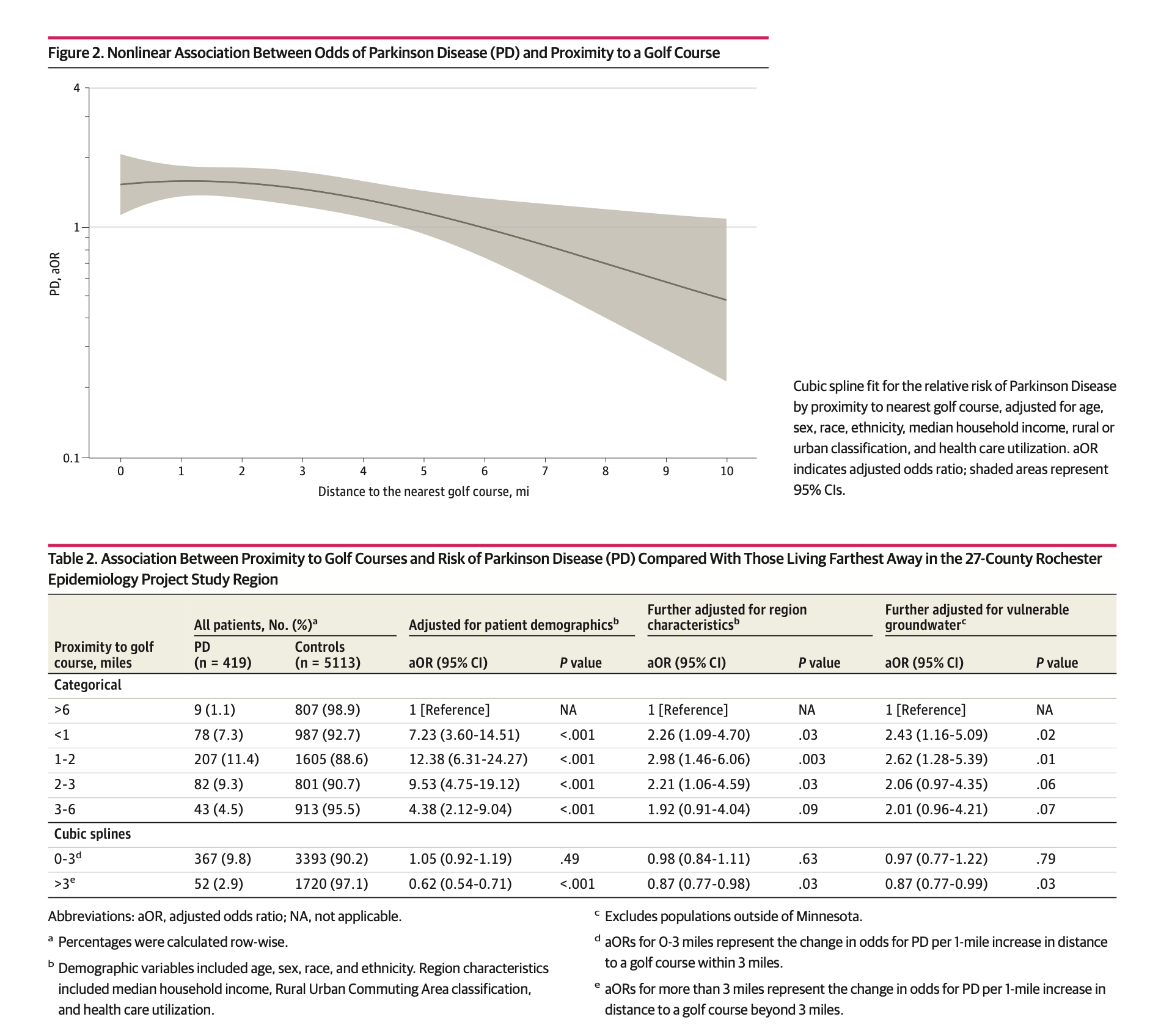
It’s crucial to remember: association doesn’t mean causation. More studies are needed to confirm whether golf course chemicals truly trigger Parkinson’s or if the pattern reflects other local factors. However, we do know living near a golf course has been statistically associated with higher odds of Parkinson’s disease.
So You Live Near a Golf Course…
If you live next to a golf course, this isn’t necessarily time to hit the panic button or start looking for a new home. However, you should take some smart precautions:
- Check your water source. Find out if your home is on a municipal system that also serves the golf course and whether your region has vulnerable groundwater.
- Filter wisely. Use certified filtration for drinking or cooking water, especially if on a shared municipal system with the course. That means systems rated for pesticide and organic contaminant removal.
- Limit other exposures. Minimize personal and home pesticide use to reduce cumulative exposure.
- Stay vigilant. Be attentive to early neurological symptoms and maintain regular checkups, particularly with aging.
A Complex Disease
Scientists now see Parkinson’s as a multi-factor disease shaped by both genes and environment. While golf course proximity alone doesn’t doom anyone, it adds to growing evidence that chronic pesticide exposure is one environmental factor we can, and should, address through smarter policy and personal choices.
If you live close to a golf course, we encourage you to advocate locally. Engage with local authorities or the course about pesticide practices and water testing, especially for older courses with long histories of chemical use. Over time, your efforts may play a crucial role in lowering Parkinson’s disease risk for you and your neighbors.